

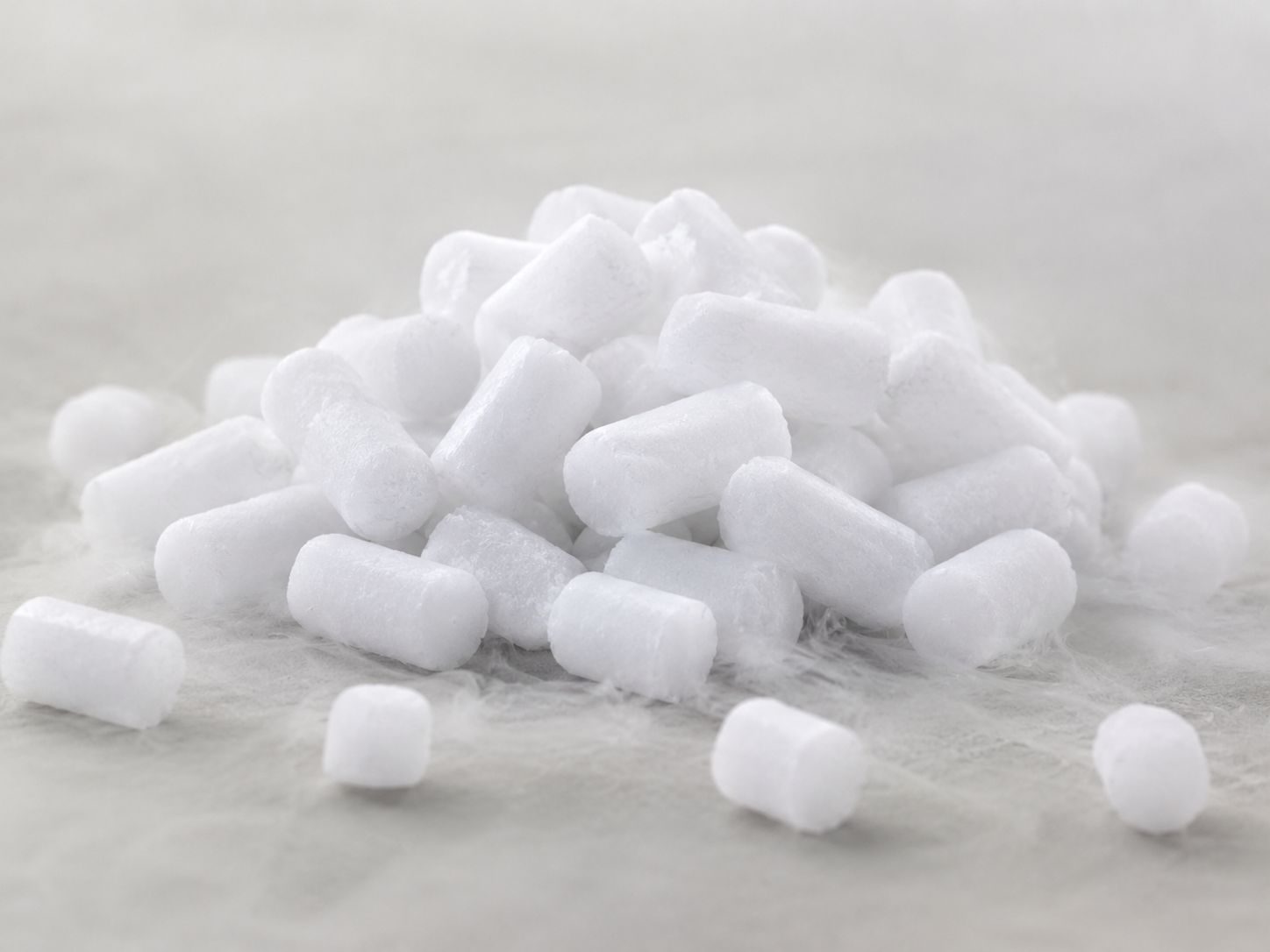
What is dry ice?
Dry ice is carbon dioxide (CO₂) in solid form. At normal atmospheric pressure it holds about −78.5 °C. Unlike ordinary water ice, dry ice goes directly from solid to gas. This is called sublimation.
Contact us- Substance
- Carbon dioxide (CO₂) in solid form
- Temperature
- About −78.5 °C at normal pressure
- Phase change
- Sublimates directly to gas
- Meltwater
- None
Dry ice is used for cooling, transport and dry ice blasting. The absence of meltwater is an advantage, but the CO₂ gas and the low temperature mean the product must be handled correctly.
How is dry ice made?
In a typical production process, the pressure on liquid CO₂ is reduced. Part of it then turns into CO₂ snow, which is compressed and shaped into pellets or other formats.
Why is it called dry ice?
The name refers to the fact that it does not melt into water, and so leaves no meltwater in normal use.
What is dry ice used for?
Common applications are cooling of temperature-sensitive goods, logistics and industrial cleaning with dry ice blasting.
Is dry ice dangerous?
Dry ice can cause frostbite on skin contact. Sublimation can raise the CO₂ concentration in poorly ventilated rooms, and closed packaging can build up dangerous pressure.
How long does dry ice last?
There is no universal shelf life. The quantity, pellet size, insulation, ambient temperature and handling all affect sublimation.
Last reviewed:
Do you need dry ice?
Tell us what you need and we will answer with a quote.